
What Does It Mean If My Car Is Stalling at Stop Lights When the Engine Is Warm?
When an engine stalls at idle after reaching operating temperature, there can be several possible causes. Fuel delivery problems, vacuum leaks, ignition issues, sensor inputs, and engine-management problems can all create similar symptoms.
That is why proper testing matters.
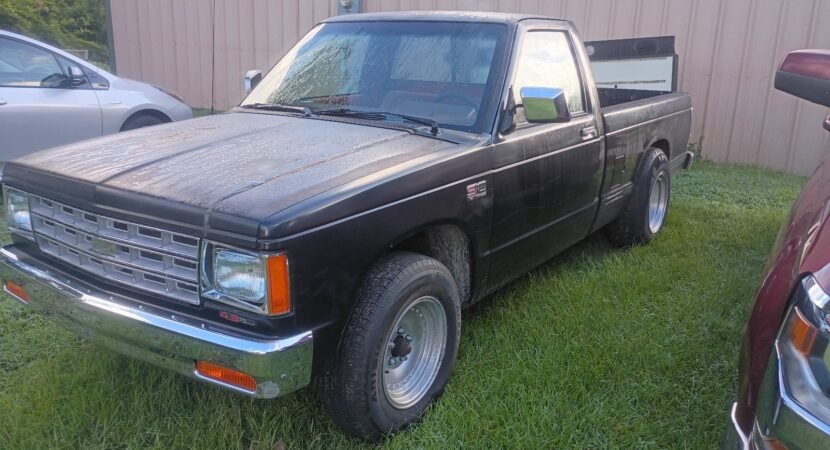
A 1989 Chevrolet S10 recently came to Mobicare Automotive Repair in Hubert, NC with a stalling concern that occurred after the engine warmed up. Technician Joseph Russo diagnosed the problem rather than replacing parts based on assumptions.
- Vehicle: 1989 Chevrolet S10
- Concern: Engine stalls at stop lights after warming up
- Technician: Joseph Russo
- Additional Concerns: Windshield wipers activating over bumps and blower motor replacement
- Location: Mobicare Automotive Repair — Hubert, NC
What Causes an Engine to Stall When Warm?
A vehicle that runs normally while cold but begins idling poorly or stalling after warming up can be difficult to diagnose.
Possible causes include:
- Incorrect engine temperature information
- Oxygen sensor problems
- Vacuum leaks
- Fuel delivery problems
- Ignition problems
- Wiring or electrical faults
- Idle control problems
The important part is determining what the vehicle is actually doing before recommending repairs.
On this S10, the customer was experiencing stalling at idle once the engine reached operating temperature. Instead of assuming the problem was a vacuum leak or immediately replacing parts, Joseph began testing the systems involved.
Diagnosing the 1989 Chevrolet S10
Technician Joseph Russo approached the concern by checking the engine’s operation and evaluating the information being used to control fuel delivery.
Testing pointed toward problems involving the oxygen sensor and engine coolant temperature sensor.
These sensors provide information the engine-management system uses to determine how the engine should operate under different conditions.
What Does the Oxygen Sensor Do?
The oxygen sensor monitors oxygen content in the exhaust.
The engine-management system uses this information to make corrections to the air-fuel mixture once the engine reaches the appropriate operating conditions.
A sensor that responds incorrectly can contribute to drivability problems, but sensor operation should be tested before replacement.
What Does the Coolant Temperature Sensor Do?
The engine coolant temperature sensor tells the engine-management system approximately how hot or cold the engine is.
That information can affect fuel delivery and other operating strategies.
If the temperature information is inaccurate, the engine may receive an incorrect fuel mixture for its actual operating temperature.
This becomes particularly important when diagnosing a vehicle that behaves differently cold versus warm.
What We Found
Joseph’s diagnostic process led to faults involving the oxygen sensor and coolant temperature sensor.
Both components were replaced after testing indicated they were contributing to the customer’s concern.
The engine was then brought back to operating temperature and tested again to verify the repair.
The S10 was able to maintain a stable idle after warming up without repeating the original stalling condition.
That final verification is an important part of our diagnostic process.
Replacing a component isn’t enough—we want to know whether the repair actually corrected the customer’s original complaint.
The S10 Had Another Strange Electrical Problem
The engine wasn’t the only concern with this truck.
The customer also reported that the windshield wipers would activate when driving over bumps.
That is the kind of intermittent electrical problem that can easily turn into a parts cannon if it isn’t properly diagnosed.
Joseph traced the problem to the wiper motor pulse board, where a connection problem was affecting operation.
The necessary repair was completed and the wiper system was tested afterward.
We also installed a customer-supplied blower motor during the visit.
Why We Diagnose Before Replacing Parts
A vehicle that stalls when warm doesn’t automatically need an oxygen sensor.
It doesn’t automatically need a coolant temperature sensor either.
Two vehicles can have nearly identical symptoms and completely different failures.
That is why our diagnostic process starts with the customer’s complaint and works toward the cause.
Symptom → Testing → Evidence → Repair → Verification
That process helps reduce unnecessary parts replacement and gives our technicians a clear direction.
The 1989 S10 is a good example.
The original complaint was simple:
The engine stalls at stop lights after it gets warm.
Joseph Russo tested the vehicle, identified the faults contributing to the condition, completed the repairs, and then verified that the engine could reach operating temperature and maintain a stable idle.
That’s the difference between replacing parts and diagnosing a vehicle.
Frequently Asked Questions About Warm-Idle Stalling
Why does my vehicle run fine cold but stall when it warms up?
Some engine-management strategies change as the engine reaches operating temperature. A problem involving sensor inputs, fuel delivery, ignition, vacuum, or another system may therefore become more noticeable once the engine is warm.
Testing the vehicle under the conditions where the problem occurs is important.
Does stalling at a stop light mean I have a bad oxygen sensor?
Not necessarily.
An oxygen sensor can contribute to drivability problems, but many other faults can produce similar symptoms.
The sensor should be tested before it is condemned.
Can a coolant temperature sensor cause drivability problems?
Yes.
The engine-management system relies on temperature information when determining how the engine should operate. Incorrect temperature information can affect fuel delivery and drivability.
Why shouldn’t I just replace the sensor mentioned by a trouble code?
Because a trouble code identifies a circuit or operating condition that the computer has detected. It does not always prove that the component named in the code is defective.
Testing helps determine whether the sensor itself, its wiring, another component, or an underlying mechanical problem is responsible.
Automotive Diagnostics in Hubert, NC
At Mobicare Automotive Repair, we believe the diagnostic process should answer a simple question:
Why is the vehicle doing this?
Whether you’re dealing with stalling, a Check Engine Light, an intermittent electrical problem, poor performance, or another difficult-to-pinpoint concern, our technicians work to identify the cause before recommending repairs.
This 1989 Chevrolet S10 was diagnosed and repaired by Joseph Russo, who traced the warm-idle stalling concern to problems involving the oxygen and coolant temperature sensor inputs and also diagnosed the truck’s unusual intermittent wiper problem.
If your vehicle has a problem that other repairs haven’t solved, bring it to Mobicare Automotive Repair in Hubert, NC.
Mobicare Automotive Repair
615 Hubert Blvd
Hubert, NC 28539
Phone: 910-421-0333
Website: mobicarenc.com
We diagnose. We don’t guess.