
Why Does My GMC K1500 Crank but Not Start Unless I Use Starting Fluid?
When an engine cranks normally but will not start, the problem can come from several different systems. If it briefly fires when starting fluid is introduced, however, that gives a technician an important clue: fuel delivery needs to be investigated.
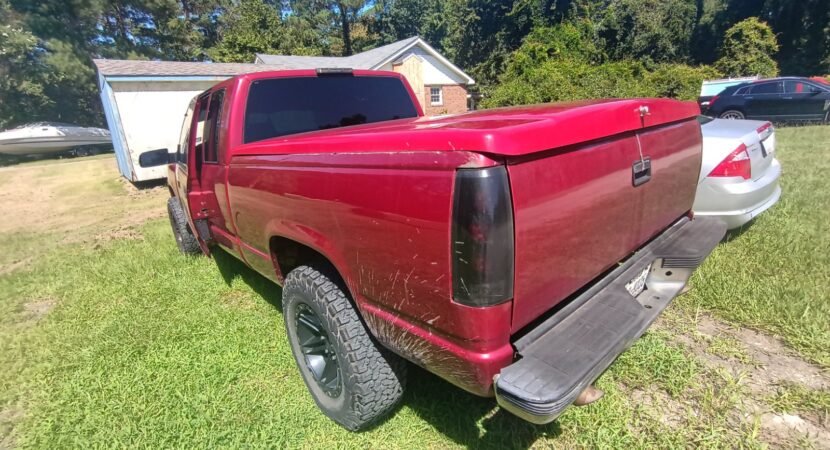
A 1998 GMC K1500 Sierra recently came to Mobicare Automotive Repair in Hubert, NC with this exact concern. The engine would crank but would not start normally, and there was no noticeable fuel-pump prime.
Instead of immediately replacing the fuel pump, we diagnosed the electrical side of the fuel system first. Testing eventually led us to a corroded electrical connection at the fuel pump circuit.
- Vehicle: 1998 GMC K1500 Sierra
- Customer Concern: Cranks but will not start normally
- Additional Symptom: No noticeable fuel-pump prime
- Diagnostic Direction: Fuel delivery and fuel-pump electrical circuit
- Finding: Corroded electrical connection affecting power to the fuel pump
- Repair: Repaired the damaged connection and wiring, protected the connection, and verified fuel-system operation
- Location: Mobicare Automotive Repair — Hubert, NC
What Does It Mean When an Engine Starts With Starting Fluid?
If an engine cranks but will not start normally and then briefly fires when starting fluid is introduced, it can indicate that the engine is capable of combustion but is not receiving the correct amount of fuel during cranking.
That does not automatically mean the fuel pump is bad.
Possible causes can include:
- Failed fuel pump
- Fuel-pump relay or fuse problem
- Damaged wiring
- Corroded electrical connectors
- Poor electrical grounds
- Low fuel pressure
- Injector control problems
- Other fuel-delivery or engine-management faults
Testing is needed before deciding which component has failed.
Diagnosing the 1998 GMC K1500 Sierra
The lack of a noticeable fuel-pump prime gave us a good place to begin, but a symptom alone is not enough to condemn a fuel pump.
Our diagnostic process included checking the vehicle for relevant fault information and testing the fuel-pump electrical circuit.
The goal was simple: determine whether the fuel pump was being properly commanded and whether electrical power and ground were reaching it.
During testing, we found that the fuel pump was not receiving the electrical power it needed.
That changed the direction of the repair.
Instead of simply installing another fuel pump, we continued tracing the electrical circuit to find out why power was missing.
Finding the Corroded Fuel-Pump Connection
Further inspection led us to a corroded electrical connection near the fuel-pump assembly.
Electrical corrosion creates resistance and can eventually interrupt current flow completely. On a circuit supplying a component such as a fuel pump, that can cause intermittent operation or a complete no-start condition.
This is also why electrical testing matters.
A vehicle can have a perfectly capable component that does not work simply because it is not receiving the voltage or ground it needs.
Replacing that component without testing the circuit would not address the actual cause of the problem.
Repairing the GMC’s Fuel-Pump Circuit
Once we identified the damaged connection, we could repair the problem instead of guessing.
The affected electrical connection and damaged wiring were addressed, and the connection was protected against moisture and corrosion.
We then verified that electrical power had been restored to the fuel-pump circuit.
After restoring the circuit, fuel-system operation was checked and the truck was repeatedly started to make sure the original no-start condition was gone.
The vehicle was also road tested before being returned to the customer.
Why Didn’t We Just Replace the Fuel Pump?
Because a fuel pump that does not run is not necessarily a failed fuel pump.
The pump requires a complete electrical circuit to operate. Depending on the vehicle, that circuit can involve:
- Fuses
- Relays
- Wiring
- Connectors
- Grounds
- PCM commands
- The fuel pump itself
If voltage is lost somewhere before it reaches the pump, installing a new pump may leave you with exactly the same problem.
Good diagnostics separate a failed component from a failed circuit.
That distinction can save a customer from paying for parts the vehicle never needed.
What Should I Do If My Truck Cranks but Won’t Start?
Avoid repeatedly using starting fluid as a substitute for repairing the problem.
Instead, pay attention to exactly what the vehicle is doing.
Does the starter crank the engine normally? Can you hear the fuel pump run briefly when the key is turned on? Does the engine try to start? Does the problem happen every time or only occasionally?
Those details can help a technician decide where testing should begin.
Does Starting With Starting Fluid Mean My Fuel Pump Is Bad?
Not necessarily.
Starting fluid can help establish that a lack of normal fuel delivery may be involved, but it does not identify the failed component by itself.
The fuel pump may have failed, but the problem could also be a relay, wiring connection, ground, control problem, restriction, or another issue affecting fuel delivery.
The circuit should be tested before replacing the pump.
Can a Corroded Connector Stop a Fuel Pump From Working?
Absolutely.
A fuel pump draws electrical current to operate. Corrosion at a connector can create excessive resistance or completely interrupt the circuit.
Depending on the severity of the connection problem, the pump might work intermittently, operate poorly, or not run at all.
On this GMC K1500, tracing the electrical circuit was what led us to the connection problem responsible for the no-start condition.
Why Is Fuel-Pressure Testing Important?
Fuel pressure provides another piece of the diagnostic puzzle.
Hearing a fuel pump run does not automatically mean the fuel system is producing the correct pressure. Likewise, a vehicle that will not start should not automatically receive a new fuel pump simply because fuel pressure is low.
Pressure testing, electrical testing, scan data, and circuit inspection can be combined to determine what is actually happening.
The tests used depend on the vehicle and the symptoms we find.
Why Electrical Testing Matters on Older Vehicles
A 1998 GMC K1500 has been on the road for nearly three decades.
Age, heat, vibration, moisture, previous repairs, and corrosion can all affect wiring and electrical connections.
That makes circuit testing especially valuable on older vehicles.
When diagnosing an electrical component, we want to know whether it has the voltage, ground, and circuit integrity necessary to operate before declaring the component itself faulty.
This GMC was a good example of why.
No-Start Diagnostics in Hubert, NC
If your car or truck cranks but won’t start, has an intermittent no-start, or appears to have a fuel-delivery problem, Mobicare Automotive Repair can diagnose the cause before parts are replaced unnecessarily.
We serve drivers in Hubert, Swansboro, Jacksonville, Cape Carteret, and surrounding Onslow County areas.
Mobicare Automotive Repair
615 Hubert Blvd
Hubert, NC 28539
Phone: 910-421-0333
If your vehicle won’t start, give us a call or schedule a diagnostic appointment. We’ll test the system, identify what is actually failing, and give you a repair plan based on the results.