
Why Is My Chevrolet Camaro Jerking During Gear Shifts and Rough Idling After Transmission Work?
Jerking during gear changes after transmission work is a problem that deserves a proper diagnosis—not another round of guessing and parts replacement.
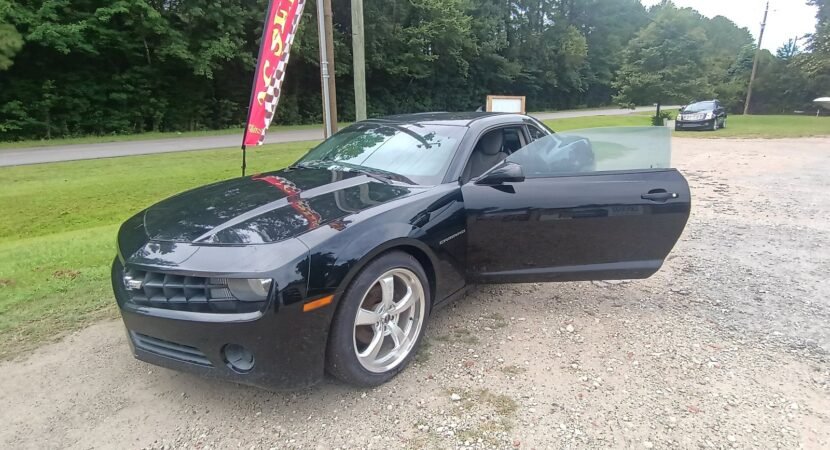
A 2013 Chevrolet Camaro LS recently came to Mobicare Automotive Repair in Hubert, NC with drivability concerns after previous transmission work. The customer reported harsh or jerking shifts along with an unstable idle that would fluctuate between roughly 500 and 800 RPM.
The vehicle had already received attention elsewhere, including throttle body cleaning and programming attempts, but the symptoms remained.
Rather than assuming one component was responsible, we approached the Camaro as a complete drivability and transmission diagnostic.
- Vehicle: 2013 Chevrolet Camaro LS
- Customer Concern: Jerking/harsh shifting and unstable idle
- Previous Repair: Transmission had previously been rebuilt
- Diagnostic Time: Approximately 1.5 hours, plus road testing
- Findings: Transmission-related concerns, damaged cooler lines, torque converter concerns, and contamination within the transmission cooling circuit
- Repair: Transmission and torque converter replacement, cooling circuit service, required programming/relearn procedures, and post-repair road testing
- Location: Mobicare Automotive Repair — Hubert, NC
Why Can a Camaro Jerk During Gear Changes?
A transmission that jerks, bangs, shudders, or shifts harshly can have several possible causes. The transmission itself is only one part of the system.
Depending on the vehicle and symptoms, we may need to investigate:
- Transmission fluid condition and level
- Transmission line pressure
- Torque converter operation
- Torque converter clutch operation
- Transmission cooler and cooler lines
- Transmission control data
- Engine load and RPM data
- Misfires or other engine performance problems
- Electrical and charging system condition
- Previous programming or adaptation procedures
This is why replacing parts based only on the symptom can get expensive quickly.
Diagnosing the 2013 Camaro
Our technicians spent approximately 1.5 hours evaluating the Camaro before determining the next repair direction.
One important finding involved the transmission cooler lines. Damage was present in the transmission fluid cooling circuit, and contamination was also a concern.
This matters because transmission fluid does much more than lubricate internal components. It is also used hydraulically to apply clutches and control transmission operation. Proper fluid circulation and temperature control are important to transmission life and performance.
We also identified concerns involving the torque converter.
The torque converter transfers engine power into the automatic transmission and contains a torque converter clutch that can mechanically connect the engine and transmission under certain operating conditions. Problems in this area can cause symptoms such as shuddering, abnormal RPM behavior, harsh engagement, or other drivability complaints.
With a vehicle that has already undergone major transmission work, these findings cannot be ignored.
Why Didn’t We Just Assume the Rebuilt Transmission Was Bad?
Because diagnosis should come before conclusions.
A harsh shift does not automatically mean the transmission needs to be replaced. Likewise, an unstable idle does not automatically mean there is an engine problem.
Modern vehicles have multiple systems interacting with one another. Engine speed, engine load, throttle position, transmission operation, torque converter clutch operation, electrical voltage, fluid pressure, and module commands can all provide information needed to identify what is actually happening.
That is why we focused on reproducing the customer’s complaint, inspecting the related systems, reviewing vehicle data, and determining what had to be corrected before recommending a major repair.
Repairing the Camaro
Based on the diagnostic findings and the condition of the transmission system, the repair ultimately required replacement of the transmission and torque converter.
The transmission cooling circuit also had to be addressed because installing another transmission without correcting contamination or flow problems can put the replacement unit at risk.
After the mechanical repairs were completed, the necessary programming, reset, and relearn procedures were performed so the vehicle’s control systems could operate correctly with the repaired drivetrain.
The battery was also replaced to correct the vehicle’s electrical system condition.
Then came one of the most important parts of the repair: verification.
We road tested the Camaro extensively while checking shift operation and overall drivability. After the repair, the transmission shifted smoothly and the engine maintained a stable idle around 650 RPM.
The vehicle was not considered finished until we could verify that the original concerns had been corrected.
What Should I Do If My Transmission Jerks After a Rebuild?
If your vehicle starts jerking, shuddering, slipping, or shifting harshly after transmission work, have the problem diagnosed before authorizing another major repair.
A technician may need to check the transmission itself, but the diagnosis can also include the torque converter, cooler circuit, fluid condition, electrical system, engine performance, and transmission control data.
If possible, document exactly when the symptom happens.
Does it occur when cold or hot? During light acceleration or heavy throttle? During one particular gear change? Does the RPM suddenly rise or fall? Does it happen when coming to a stop?
Those details can make reproducing an intermittent problem much easier.
Can a Bad Torque Converter Cause Jerking or Shuddering?
Yes.
A torque converter or torque converter clutch problem can cause shuddering, unusual engagement, RPM fluctuations, or other drivability symptoms.
However, similar symptoms can also come from internal transmission problems, engine performance issues, mounts, fluid problems, or control system faults.
Testing is what separates a likely cause from the actual cause.
Why Are Transmission Cooler Lines Important?
Transmission cooler lines carry automatic transmission fluid between the transmission and its cooling circuit.
Problems such as leaks, restrictions, damaged lines, or contamination can interfere with proper fluid circulation and temperature control.
They are especially important to inspect when replacing a failed transmission. If debris from a previous failure remains in the cooler circuit, it can contaminate the replacement transmission.
What Does a Transmission Diagnostic Include?
There is no single test that diagnoses every transmission problem.
At Mobicare Automotive Repair, the diagnostic process depends on the customer’s specific complaint. Testing may include a road test, visual inspection, fluid inspection, scan data analysis, fault-code evaluation, electrical testing, cooler circuit inspection, and additional mechanical or hydraulic testing when necessary.
The goal is not simply to retrieve a trouble code. The goal is to determine why the vehicle is behaving the way it is.
Why Post-Repair Road Testing Matters
Installing the part is not the end of the repair.
After major drivetrain work, the vehicle needs to be tested under real operating conditions. We want to know that the transmission shifts correctly, the original symptom is gone, temperatures and operating data remain reasonable, and no new problems appear once the vehicle is driven.
On this Camaro, extended road testing confirmed smooth transmission operation and a stable idle before the vehicle was returned to the customer.
Transmission and Drivability Diagnostics in Hubert, NC
If your vehicle is jerking during shifts, shuddering, slipping, idling poorly, or still having problems after another shop has attempted a repair, Mobicare Automotive Repair can diagnose the problem before more parts are replaced.
We serve drivers in Hubert, Swansboro, Jacksonville, Cape Carteret, and surrounding Onslow County areas.
Mobicare Automotive Repair
615 Hubert Blvd
Hubert, NC 28539
Phone: 910-421-0333
If you’re dealing with a difficult transmission or drivability problem, call us or schedule an appointment online. We’ll start with the symptoms, test the vehicle, and work toward finding the actual cause.